

Create and showcase interactive sidebar content with the Sidebar Tab Accordion Block, where panels expand to reveal FAQs, feature lists, or detailed information. Choose from pre-designed templates with vertical or horizontal alignment, and enhance your display with smart triggers, SEO-ready FAQ schema, smooth content animations, and full customization to match your brand.
Explore Ready Sidebar Tab Accordion Patterns →
How to Add the Sidebar Tab Accordion Block:
To add the Sidebar Tab Accordion block to your layout, follow these steps:
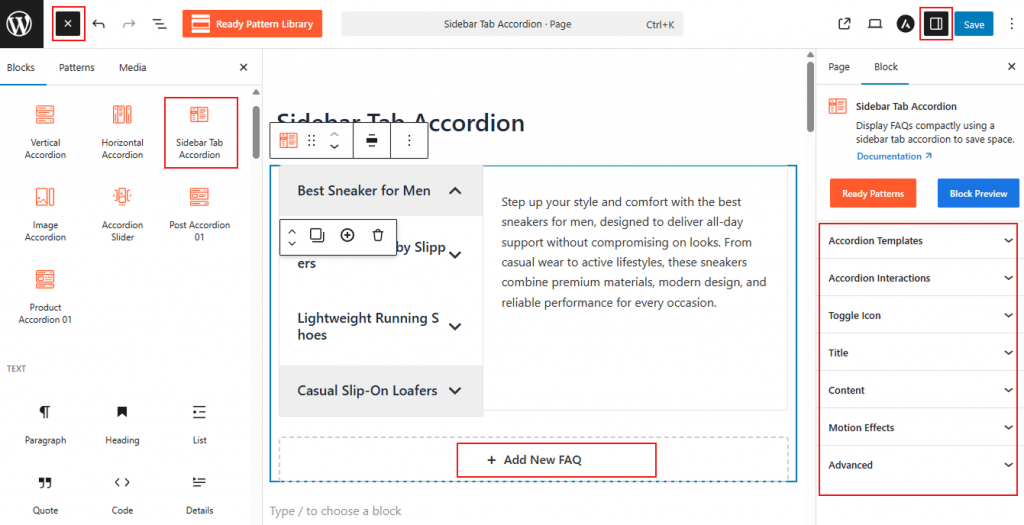
- Go to your WordPress Dashboard.
- Navigate to Pages> Add New (or edit an existing page).
- In the block editor, click the “+” (Add Block) button.
- Search for “Sidebar Tab Accordion” under the Easy Accordion category.
- Click to insert the block into your page.
How to Customize the Sidebar Tab Accordion:
Using the Sidebar Tab Accordion, you can showcase FAQs or text-heavy content in a clean, space-saving layout. Follow the options below to add items and customize the styling:
- Add Unlimited Items: Use the “+ Add New” button to insert as many accordion panels as you need.
- Easy Controls: Define which items stay open by default and manage toggle triggers like Click or Hover.
- Enhance Headers: Add subtitles, choose unique toggle icons, and set HTML tags to improve visual hierarchy and SEO.
- Full Styling: Customize typography, colors, backgrounds, spacing, and container design for a seamless brand fit.
Now, let’s explore the detailed Settings & Stylings:
Accordion Templates: General
From this panel, you can choose the core layout, spacing, and essential SEO features for your sidebar accordion to ensure a compact and high-performing display.
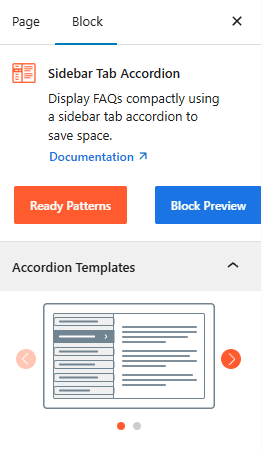
- Select Templates: Choose from pre-designed Accordion Templates or use Ready Patterns to quickly jumpstart your design.
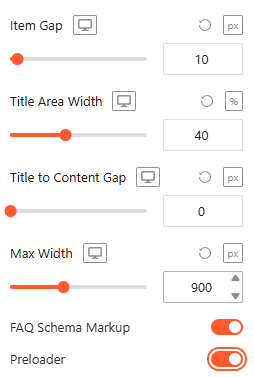
- Layout Spacing: Use the responsive sliders to adjust the Item Gap, Title Area Width, and the specific Title to Content Gap for precise alignment.
- Width Control: Define a Max Width to ensure the accordion fits perfectly within your sidebar or page section.
- SEO & Performance: Enable FAQ Schema Markup to help search engines understand your content and toggle the Preloader for a smoother user experience.
Accordion Interactions:
From the Accordion Interactions panel, you can define how panels trigger, scroll, and link, ensuring a smooth and intuitive browsing experience for your visitors.
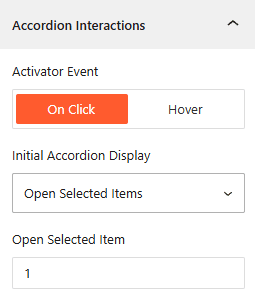
- Activator Event: Choose the trigger to open accordions: On Click or Hover.
- Open First Item: Select it to open only the first accordion item, while keeping other items collapsed.
- Open Selected Item: Select it to set the number of accordion items you want to show on Click, while keeping other items collapsed.
Toggle Icon: General
From the Toggle Icon panel, you can customize the appearance, behavior, and positioning of the icons that indicate whether an accordion item is expanded or collapsed.
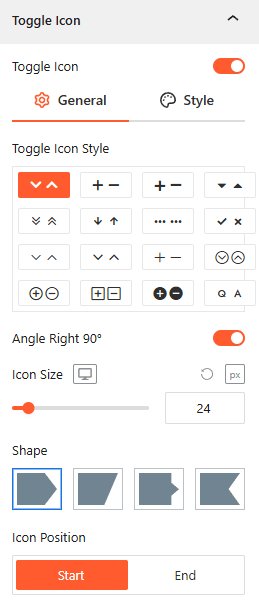
- Toggle Icon Style: Select from various icon pairs, like arrows or plus/minus signs, for open and closed states.
- Angle Right 90°: Toggle this to rotate the icon when the accordion panel is active.
- Icon Size: Use the responsive slider to set the icon’s pixel size across different devices.
- Icon Position: Set the toggle icon to appear at the Start or End of the header.
Style Toggle Icon:
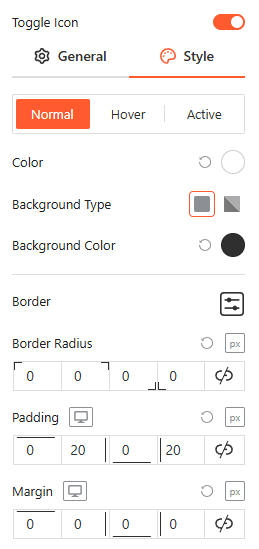
Customize the colors, background types, borders, and spacing of your icons for Normal, Hover, and Active states from here.
Title: General
From the Title panel, you can configure the structural tags, alignment, and sub-labels for your accordion headers to improve both SEO and visual hierarchy.
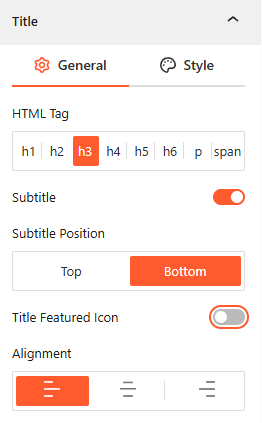
- Choose HTML Tag: Select the appropriate heading tag (h1–h6, p, or span) to ensure correct SEO structure for your questions.
- Enable Subtitle: Toggle this on to add a secondary line of text to your accordion header.
- Subtitle Position: Define whether the subtitle appears at the Top or Bottom of the primary title.
- Vertical Alignment: Set the Title Alignment to the Top, Middle, or Bottom relative to the accordion.
Content: General
From the Content panel, you can control the height, visibility, and animation of your accordion’s expanded area to ensure your answers are presented clearly.
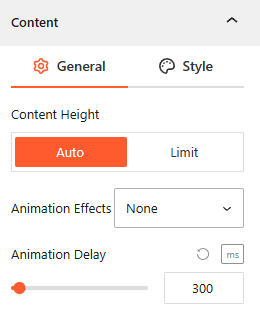
- Content Height: Select Auto for natural expansion or Limit to set a specific maximum height for the content area.
- Animation Effects: Choose visual effects from 10 more styles for the content when it expands to create a more dynamic feel.
- Animation Delay: Define the autoplay time (in ms) before the opening animation begins.
Style Content:
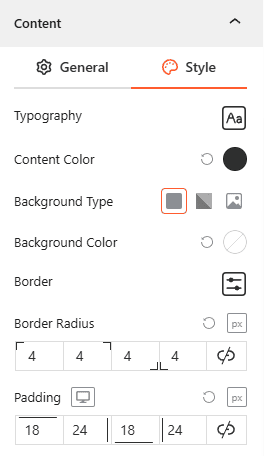
From this panel, you can customize the typography, the content colors, background types, borders, and spacing to ensure a clean layout.
Motion Effects:
From the Motion Effects panel, you can add animations and interactive movement to your accordion, making the content feel more dynamic as users scroll or interact.
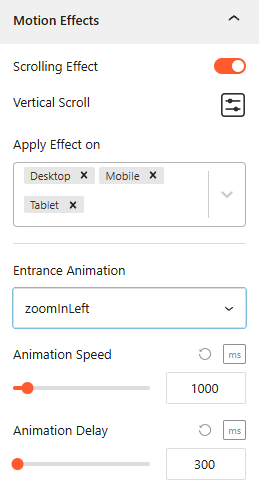
- Enable Scrolling Effects: Use this toggle to enable or disable scroll-based interactions.
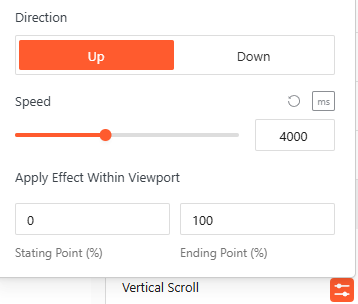
- Vertical Scroll: Use this to set how the animation will appear. Set the Direction (Up/down), speed, and apply the effect within the viewport.
- Apply Effect ON: Set the devices, such as Desktop, Tablet, or Mobile, to apply the effect on.
- Entrance Animation: Choose how the accordion appears when it enters the viewport, such as Fade In, Slide Up, Zoom In, or Bounce.
- Animation Speed & Delay: Set the Animation Speed & Adjust Animation Delay in milliseconds from here.
Advanced Settings:
The Advanced panel allows you to manage the overall container of the accordion, covering visibility, accessibility, and high-level styling.
General:
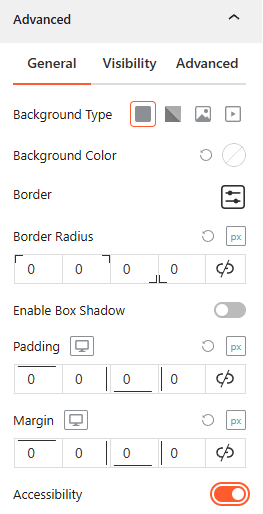
- Background & Border: Set the background type (Solid, Gradient, Image, or Video), border-radius, and box shadows for the main block container.
- Spacing: Define the precise Padding and Margin (in px) for the entire accordion structure.
- Accessibility: Enable this toggle to ensure the accordion follows standard web accessibility guidelines for screen readers and keyboard navigation.
Visibility:
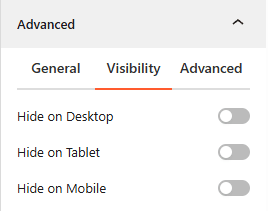
- Device Hiding: Toggle visibility on or off to hide the entire accordion block on Desktop, Tablet, or Mobile viewports for better responsive control.
Advanced:
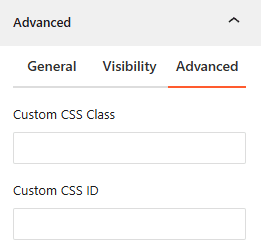
- Custom CSS: Apply a unique Custom CSS Class or Custom CSS ID to the block for deep styling or advanced developer hooks.
Congratulations! Let’s watch a live demo of how your Sidebar Tab Accordion will look.